
How to Pray Salah: A Step-by-Step Guide for Beginners


How to Pray Salah: A Step-by-Step Guide for Beginners
The Complete Visual Guide to Your Daily Prayers
Welcome to the definitive guide to performing Salah (Namaz). The five daily prayers are the most essential and rewarding act of worship in Islam, a direct channel to communicate with Allah (SWT). Whether you are a new Muslim, seeking to correct your existing prayer, or simply looking for clarity, the following comprehensive guide is presented visually and step-by-step. You will find clear instructions, Arabic recitations, English transliterations, and posture details for every single movement, ensuring you can perform your prayers with confidence and sincerity.
Part I: Preparation and Intention (Niyyah)
Before starting your prayer, ensure these four essentials are met:
Purity: Perform Wudu (Ablution) or Ghusl (if required).
Cleanliness: Your body, clothing (Satr), and the place of prayer must be clean.
Qiblah: Face the Qiblah (the direction of the Kaaba in Makkah).
Niyyah (Intention): Make a sincere intention quietly in your heart for the specific prayer you are about to perform (e.g., Fajr, Zuhr, etc.).
Step 1: Stand Up for Namaz
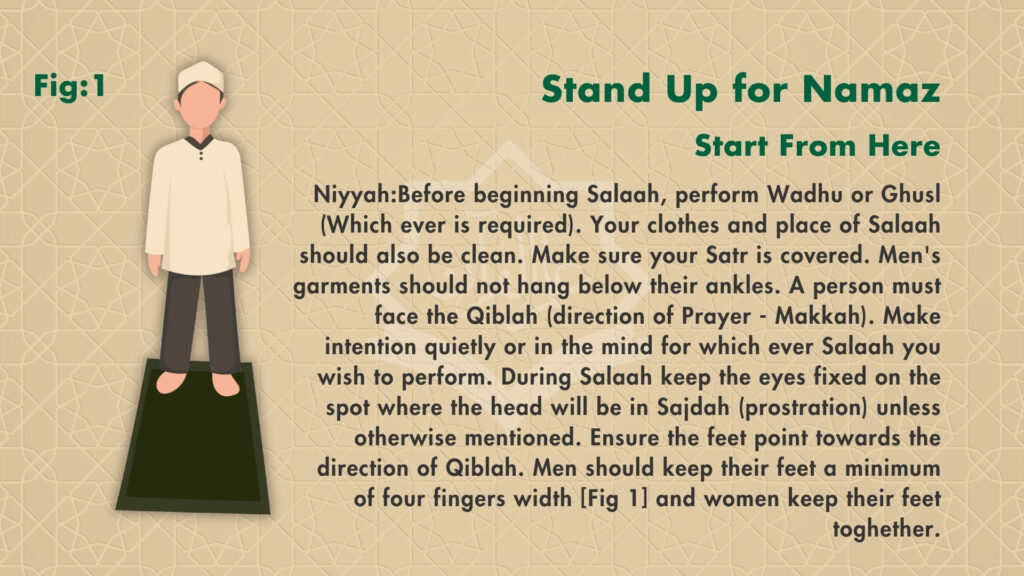
The prayer begins in the standing position, known as Qiyaam.
Posture: Ensure your eyes are fixed on the spot where your forehead will rest during prostration (Sajdah).
Foot Placement: Men should keep their feet a minimum of four finger widths apart. Women should keep their feet close together.
Garments: Men’s garments should not hang below their ankles.
Step 2: Starting the Prayer (Takbeer-e-Tahreema)
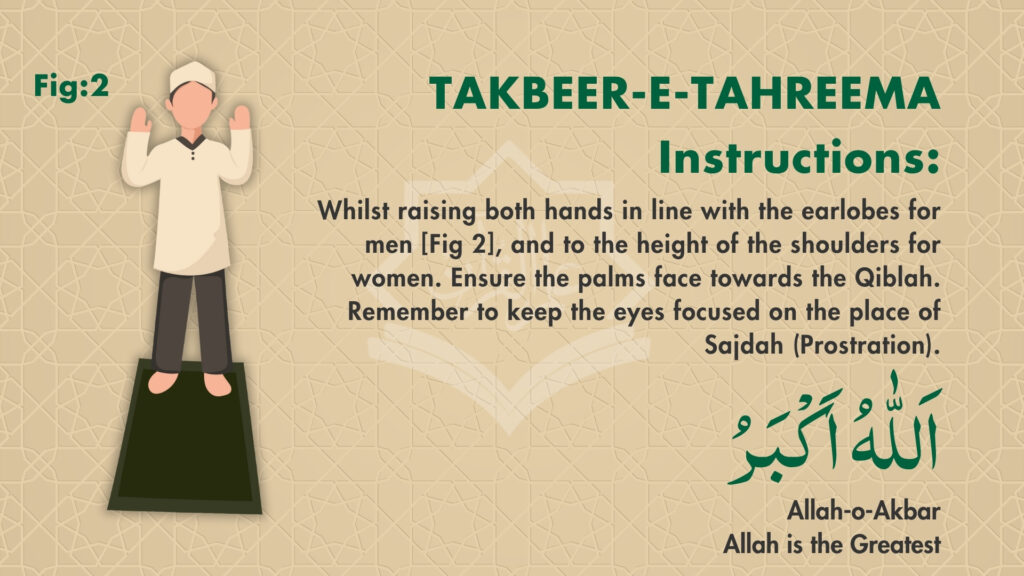
This step officially begins your Salah, and nothing from the outside world can interrupt it.
Hand Position: Men raise their hands in line with the earlobes. Women raise their hands to the height of the shoulders.
Focus: Maintain eye focus on the place of Sajdah (Prostration).
- Action: Raise both hands while proclaiming Say:
اَللّٰہُ اَكْبَرُ
Translation:
Allah is the Grastest
Part II: The Standing Posture (Qiyaam) and Recitation
The next several steps constitute the Qiyaam, where you stand with your hands folded and recite from the Qur’an.
Step 3: Folding Hands & Reciting Thana
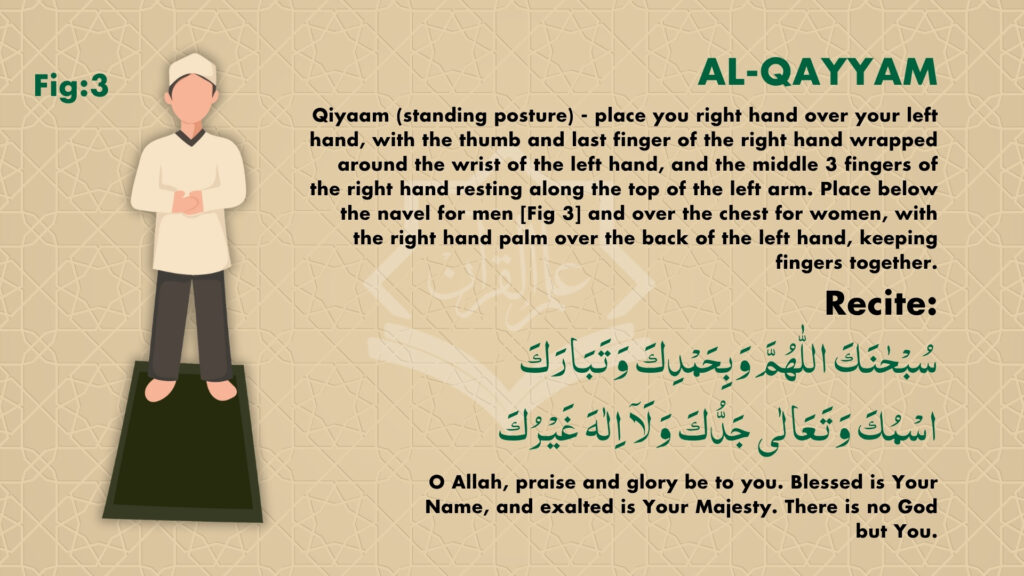
Immediately after the Takbeer-e-Tahreema, fold your hands in the standing position.
Hand Placement: Place your right hand over your left hand.
Men place their hands below the navel.
Women place their hands over their chest.
Recite (Thana): Recite the opening glorification quietly:
سُبْحٰنَكَ اللّٰهُمَّ وَبِـحَمْدِكَ وَتَـبَارَكَ اسْمُكَ وَتَـعَالٰي جَدُّكَ وَلَآ اِلٰهَ غَيْـرُكَ
Translation:
O Allah, praise and glory be to you. Blessed is Your Name, and exalted is Your Majesty. There is no God but You.
Step 4: Reciting Ta'awwuz and Tasmiah
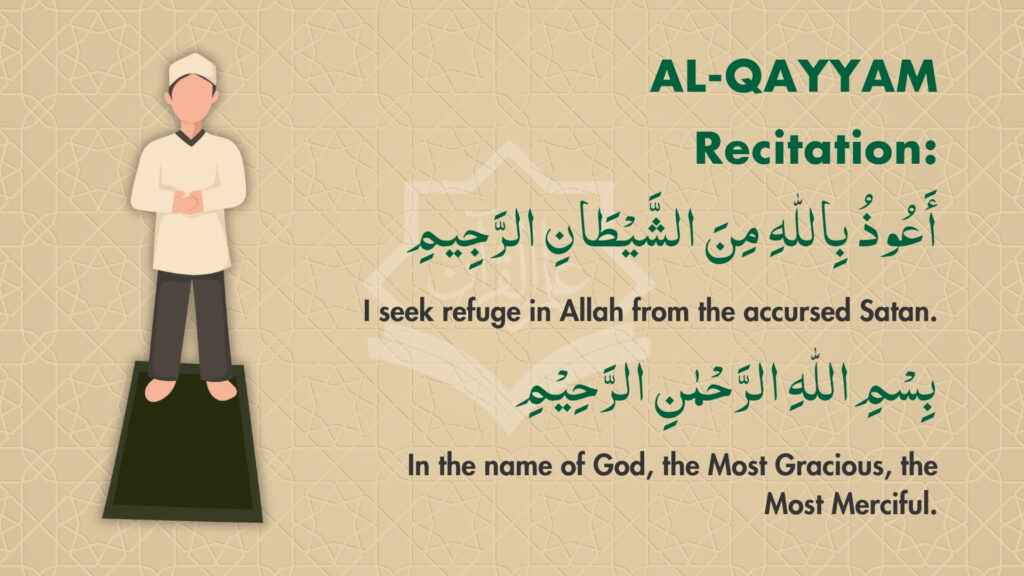
After the Thana, you recite the following two verses quietly:
- Ta’awwuz and Tasmiah
أَعُوذُ بِاللهِ مِنَ الشَّيْطَانِ الرَّجِيمِ
Translation:
I seek refuge in Allah from the accursed Satan.
بِسْمِ اللهِ الرَّحْمٰنِ الرَّحِيْمِ
Translation
In the name of God, the Most Gracious, the Most Merciful.
Step 5: Reciting the Opening Surah (Al-Fatiha)
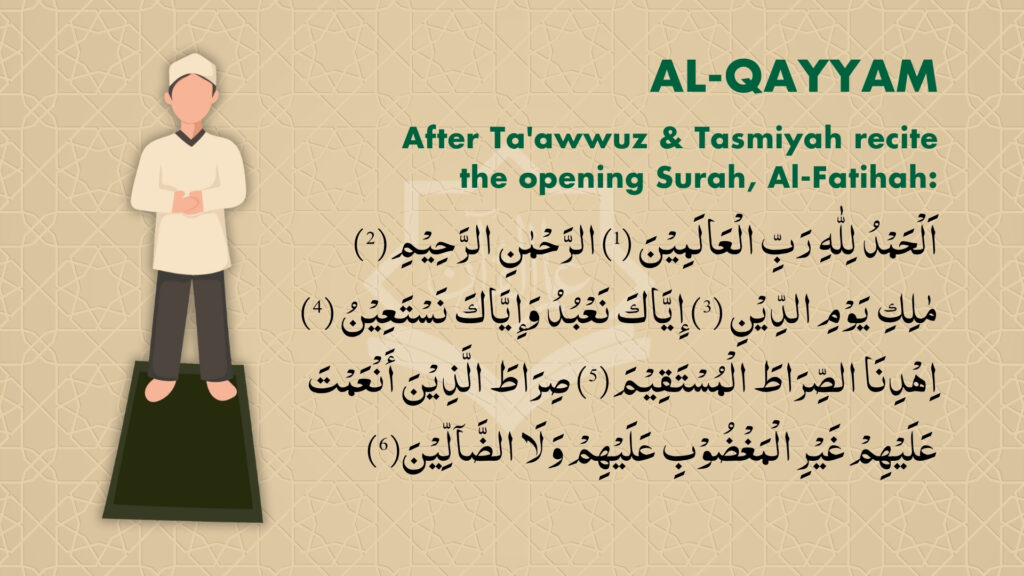
Following the Ta’awwuz and Tasmiah, the compulsory recitation of Surah Al-Fatiha begins:
اَلْحَمْدُ لِلّٰهِ رَبِّ الْعَالَمِيْنَ (1) الرَّحْمٰنِ الرَّحِيْمِ (2) مٰلِكِ يَوْمِ الدِّيْنِ (3) إِيَّاكَ نَعْبُدُ وَإِيَّاكَ نَسْتَعِيْنُ (4) اِهْدِنَا الصِّرَاطَ الْمُسْتَقِيْمَ (5) صِرَاطَ الَّذِيْنَ أَنْعَمْتَ عَلَيْهِمْ غَيْرِ الْمَغْضُوْبِ عَلَيْهِمْ وَلَا الضَّآلِّيْنَ(6)
Translation:
In the name of Allah, the Most Merciful, the Most Kind.
All praise is for Allah, the Lord of all worlds.
The Most Merciful, the Most Kind.
Master of the Day of Judgment.
You alone we worship, and You alone we ask for help.
Guide us on the straight path,
The path of those You have blessed,
Not of those who earned Your anger, nor those who went astray.
Step 6: Reciting a Second Surah
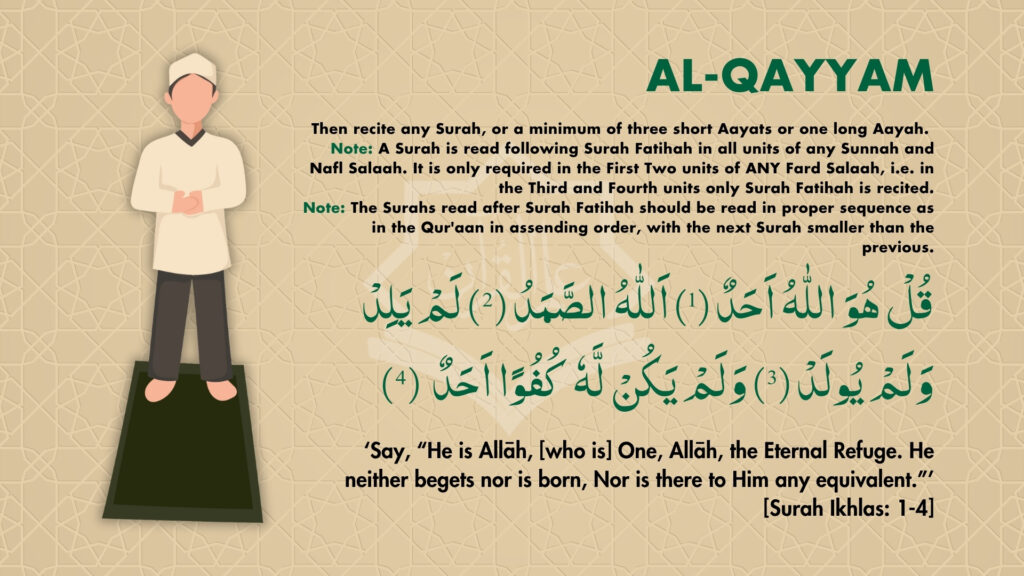
After completing Surah Al-Fatiha, recite any full Surah or a minimum of three short Aayaat (verses).
Fard vs. Sunnah: Note that this extra recitation is only required in the First and Second units of any prayer (Fard, Sunnah, or Nafl). In the Third and Fourth units of Fard prayer, only Surah Fatiha is recited.
Example (Surah Ikhlas):
قُلْ هُوَ اللّٰهُ اَحَدٌ (1) اَللّٰهُ الصَّمَدُ (٢) لَمْ يَلِدْ وَلَمْ يُولَدْ (3) وَلَمْ يَكُنْ لَّهٗ كُفُوًا اَحَدٌ (4)
Translation:
Say, “He is Allah, [Who is] One,
Allah, the Eternal Refuge.
He neither begets nor is born,
Nor is there to Him any equivalent.”
Part III: Ruku' and Sajdah (Bowing and Prostration)
Step 7: Ruku' (Bowing Down)
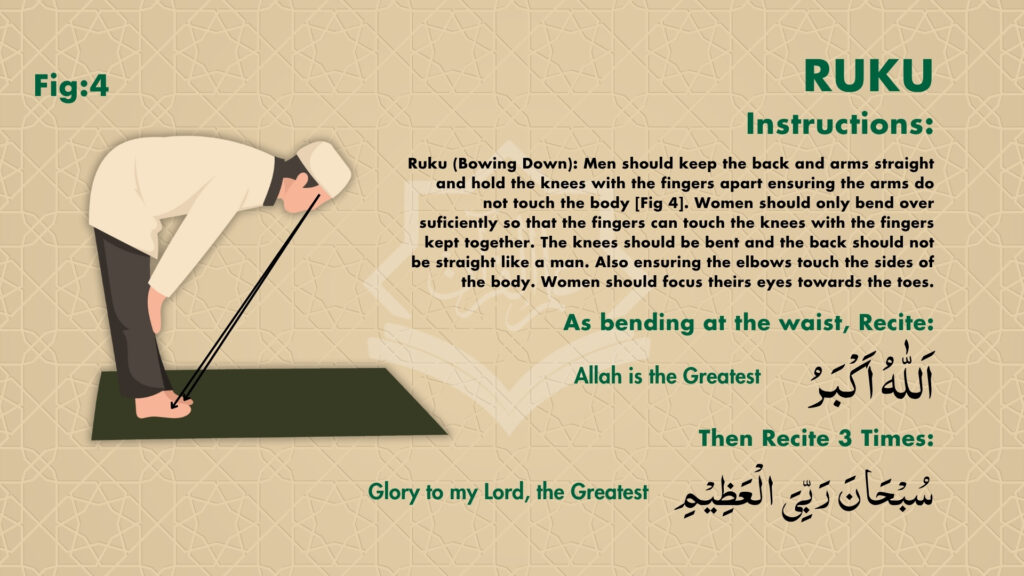
After completing the recitation, proclaim ‘Allahu Akbar’ and move into the bowing position (Ruku’).
Posture: Men should keep their back straight and hold the knees with fingers apart. Women should only bend over slightly so that their fingers can touch their knees, keeping the knees bent and the elbows touching the sides of the body.
Recite 3 Times:
سُبْحَانَ رَبِّيَ الْعَظِيمِ
Translation:
Glory to my Lord, the Greatest.
Step 8: Rising from Ruku'
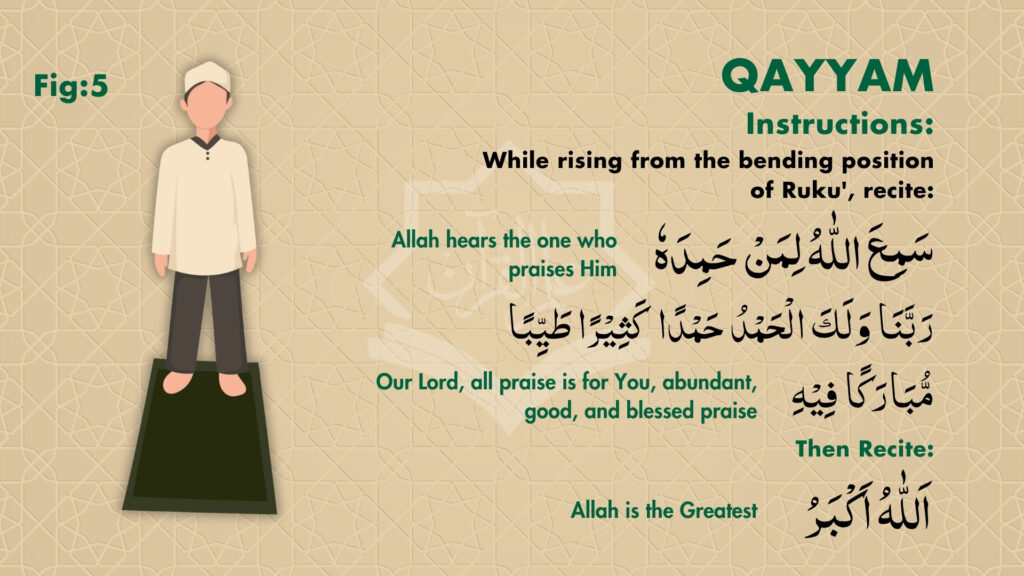
While rising back to a full standing posture, recite the following two phrases:
سَمِعَ اللّٰهُ لِمَنْ حَمِدَهٗ
Translation:
Allah hears the one who praises Him
رَبَّنَا وَلَكَ الْحَمْدُ حَمْدًا كَثِيْرًا طَيِّبًا مُّبَارَكًا فِيْهِ
Translation:
Our Lord, all praise is for You, abundant, good, and blessed praise.
Then, proclaim ‘Allahu Akbar’ to prepare for prostration.
Step 9: Sajdah (Prostration)
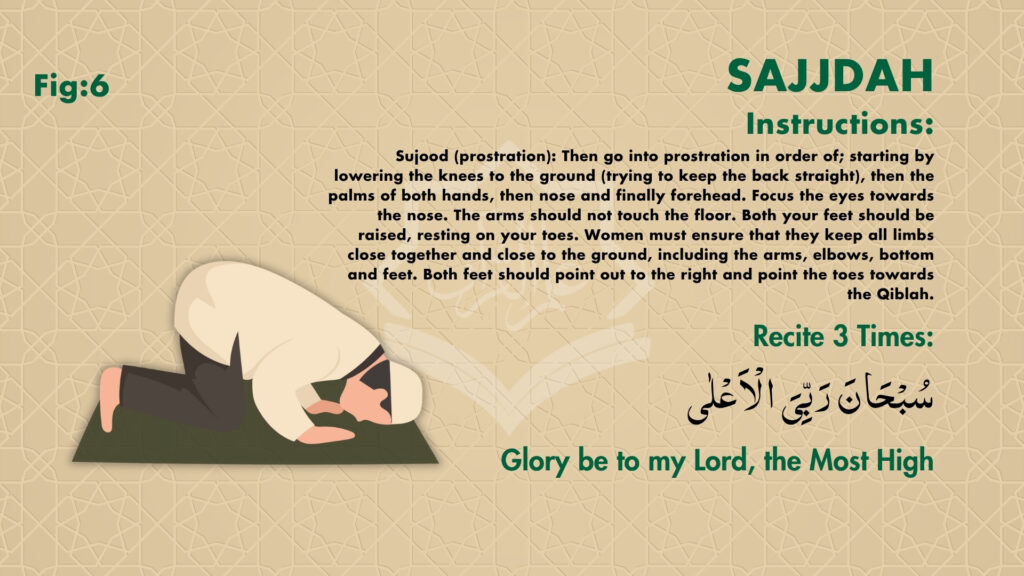
Move from standing straight into Sajdah (Prostration). This is where the forehead, nose, palms, knees, and toes must touch the ground.
- Recite 3 Times:
سُبْحَانَ رَبِّيَ الْاَعْلٰى
Translation:
Glory be to my Lord, the Most High.
Step 10: Jalsah (Sitting) and Second Sajdah
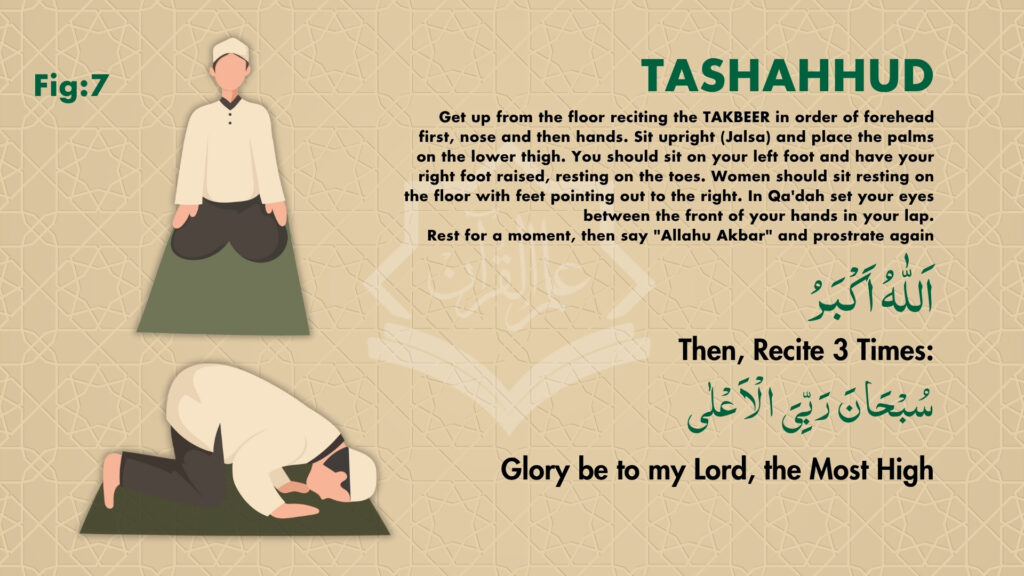
After the first Sajdah, rise up, reciting ‘Allahu Akbar’, and sit upright for a moment (Jalsah).
Sitting: Men should sit on their left foot and have their right foot raised, resting on the toes. Women should sit resting on the floor with their feet pointing out to the right.
Second Sajdah: Rest briefly, then proclaim ‘Allahu Akbar’ and perform the second Sajdah in the exact same manner as the first, repeating the recitation: ‘Subhana Rabbiy-al-A’la’ 3 times.
This completes one full Rak’ah (Unit) of Prayer.
Part IV: Qu'ood and Concluding the Prayer
If your prayer requires more than one Rak’ah, you stand up now (reciting ‘Allahu Akbar’). If this is the final Rak’ah, you move to the final sitting (Qu’ood).
Step 11: The Final Sitting (Qu'ood) and Tashahhud
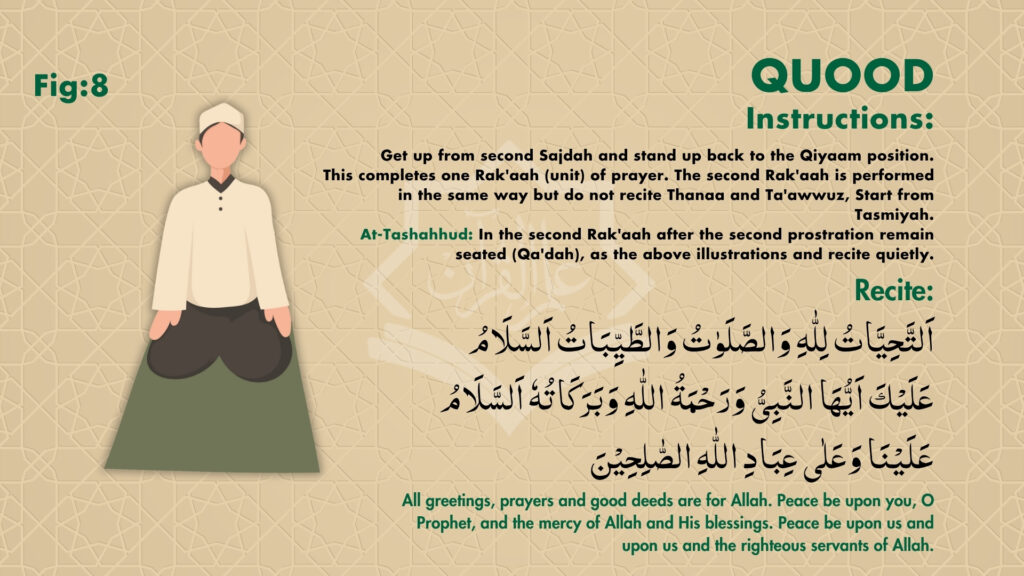
In the final sitting, you recite At-Tashahhud (also known as Attahiyat):
Recite:
اَلتَّحِيَّاتُ لِلّٰهِ وَالصَّلَوٰتُ وَالطَّـيِّـبَاتُ اَلسَّلَامُ عَلَيْكَ اَيُّـهَا الـنَّبِىُّ وَرَحْمَةُ اللّٰهِ وَبَـرَكَاتُهٗ اَلسَّلَامُ عَـلَـيْـنَا وَعَلٰى عِبَادِ اللّٰهِ الصّٰلِحِيْنَ
Translation: All greetings, prayers and good deeds are for Allah. Peace be upon you, O Prophet, and the mercy of Allah and His blessings. Peace be upon us and upon us and the righteous servants of Allah.
Step 12: Tashahhud and The Finger
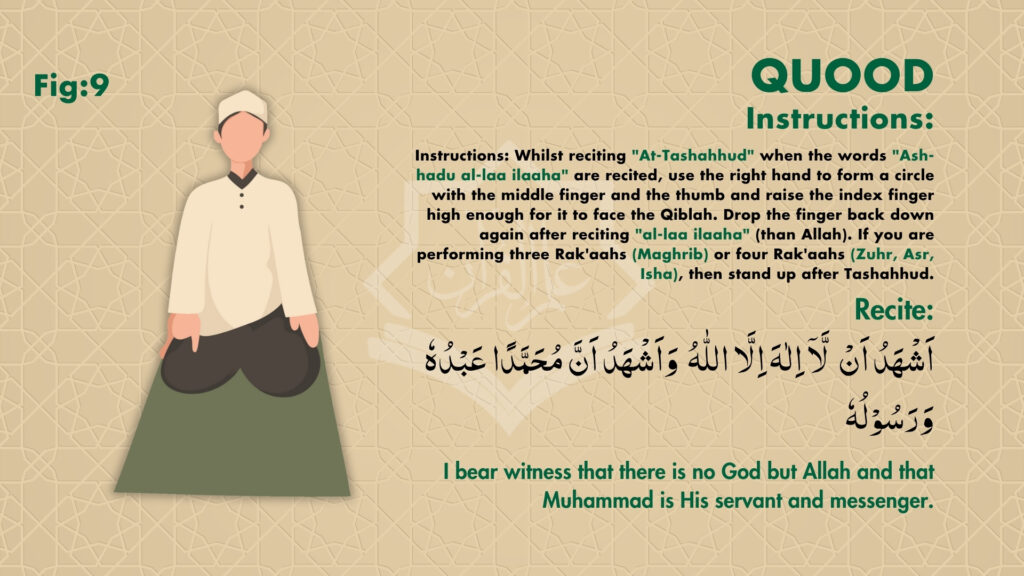
The final part of At-Tashahhud is the declaration of faith.
The Finger: Whilst reciting ‘Ash-hadu al-laa ilaaha’, you use your right hand to form a circle with the middle finger and the thumb and raise the index finger towards the Qiblah. Drop the finger back down again after reciting ‘il-laa ilaaha’.
Recite:
اَشْهَدُ اَنْ لَّآ اِلٰهَ اِلَّا اللّٰهُ وَاَشْهَدُ اَنَّ مُـحَمَّدًا عَـبْدُهٗ وَرَسُوْلُهٗ
Translation:
I bear witness that there is no God but Allah and that Muhammad is His servant and messenger.
Step 13: Reciting Durood-e-Ibrahim
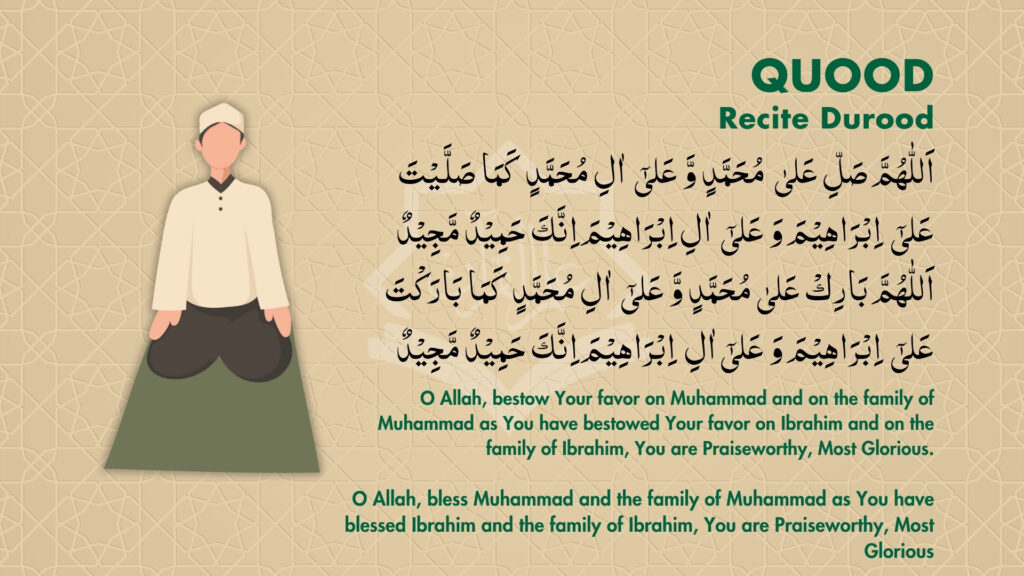
In the final Qu’ood of any 2, 3, or 4 Rak’ah prayer, you must recite the Durood-e-Ibrahim after At-Tashahhud.
Recite: The full Durood asking Allah to send His blessings upon Prophet Muhammad (peace be upon him) and the family of Abraham.
After Durood: You may recite any short, authenticated Du’aa (supplication) before the final step.
اَللّٰهُمَّ صَلِّ عَلىٰ مُـحَمَّدٍ وَّ عَليٰٓ اٰلِ مُـحَمَّدٍ كَمَا صَلَّــيْتَ عَليٰٓ اِبْـرَاهِيْمَ وَ عَليٰٓ اٰلِ اِبْـرَاهِيْمَ اِنَّكَ حَمِيْدٌ مَّـجِيْدٌ
اَللّٰهُمَّ بَارِكْ عَلىٰ مُـحَمَّدٍ وَّ عَليٰٓ اٰلِ مُـحَمَّدٍ كَمَا بَارَكْتَ عَليٰٓ اِبْـرَاهِيْمَ وَ عَليٰٓ اٰلِ اِبْـرَاهِيْمَ اِنَّكَ حَمِيْدٌ مَّـجِيْدٌ
Translation:
O Allah, bestow Your favor on Muhammad and on the family of Muhammad as You have bestowed Your favor on Ibrahim and on the family of Ibrahim, You are Praiseworthy, Most Glorious.
O Allah, bless Muhammad and the family of Muhammad as You have blessed Ibrahim and the family of Ibrahim, You are Praiseworthy, Most Glorious
Step 14: Recite any short, authenticated Du'aa (supplication) before the final step
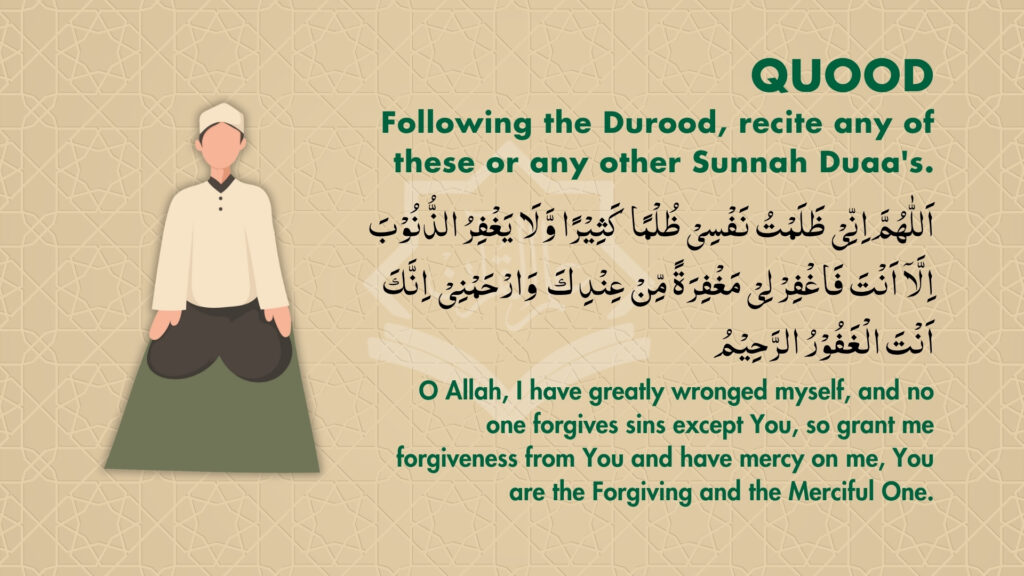
اَللّٰهُمَّ اِنِّيْ ظَلَمْتُ نَـفْسِىْ ظُلْمًا كَثِيْرًا وَّلَا يَغْفِرُ الذُّنُوْبَ اِلَّآ اَنْتَ فَاغْفِرْ لِيْ مَغْفِرَةً مِّنْ عِنْدِ كَ وَارْحَمْنِيْ اِنَّكَ اَنْتَ الْـغَـفُوْرُ الرَّحِيْمُ
Translation:
O Allah, I have greatly wronged myself, and no one forgives sins except You, so grant me forgiveness from You and have mercy on me, You are the Forgiving and the Merciful One.
Or
,اَللّٰھُمَّ اِنِّیْٓ اَعُوْذُبِکَ مِنْ عَذَابِ الْقَبْرِ, وَمِنْ عَذَابِ جَھَنَّمَ, وَمِنْ فِتْنَۃِ الْمَحْیَا وَالْمَمَاتِ وَمِنْ شَرِّ فِتْنَۃِ الْمَسِیْحِ الدَّجَّالِ
Translation:
O Allah, I seek refuge in You from the punishment of the grave, and from the punishment of Hell-fire, and from the trials of life and death, and from the evil of the trial of the False Messiah.
Step 14: Concluding with Salaam
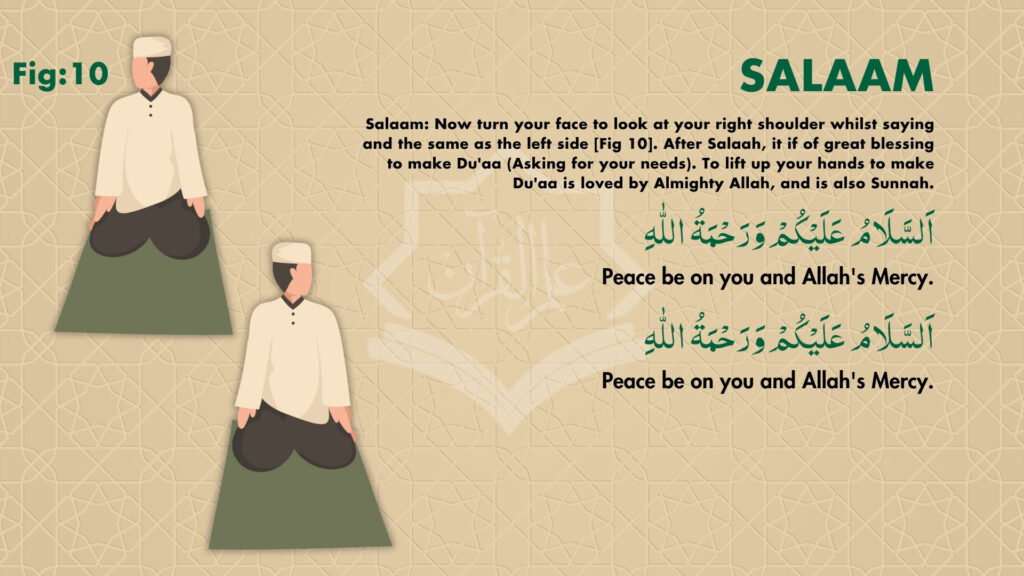
The prayer is concluded by turning your face to look over your right shoulder and then repeating the action to the left shoulder.
Turn Right (First Salaam):
اَلسَّلَامُ عَلَيْکُمْ وَرَحْمَةُ اللّٰهِ
Translation:
Peace be upon you and Allah’s Mercy.
Turn Left (Second Salaam): Repeat the same recitation.
اَلسَّلَامُ عَلَيْکُمْ وَرَحْمَةُ اللّٰهِ
Translation:
Peace be upon you and Allah’s Mercy.
You may then raise your hands to make personal Du’aa (asking for your needs).
The Profound Importance of Salah (Namaz) in Islam
Once you have learned the steps, understanding the immense value of this daily worship will help you establish and maintain your prayers with sincerity and focus (Khushu’). Salah is not just a ritual; it is the cornerstone of a believer’s life:
The First Accountability: The Prophet (PBUH) stated that the first matter about which people will be judged on the Day of Judgment is Salah. This underscores its ultimate importance.
A Cleanser of Sins: Salah acts as a cleanser for the minor sins committed between prayers, as it is compared to a river washing away impurities five times a day.
Direct Connection: The act of Sajdah (prostration) is the moment a believer is closest to their Lord, providing five dedicated opportunities for spiritual renewal.
Conclusion:
Mastering the steps of Salah is the beginning of a lifetime journey of spiritual growth. May Allah (SWT) accept your efforts and help you establish your five daily prayers with sincerity and devotion. Ameen.